When you click on links to various merchants on this site and make a purchase, this can result in this site earning a commission. Affiliate programs and affiliations include, but are not limited to, the eBay Partner Network.
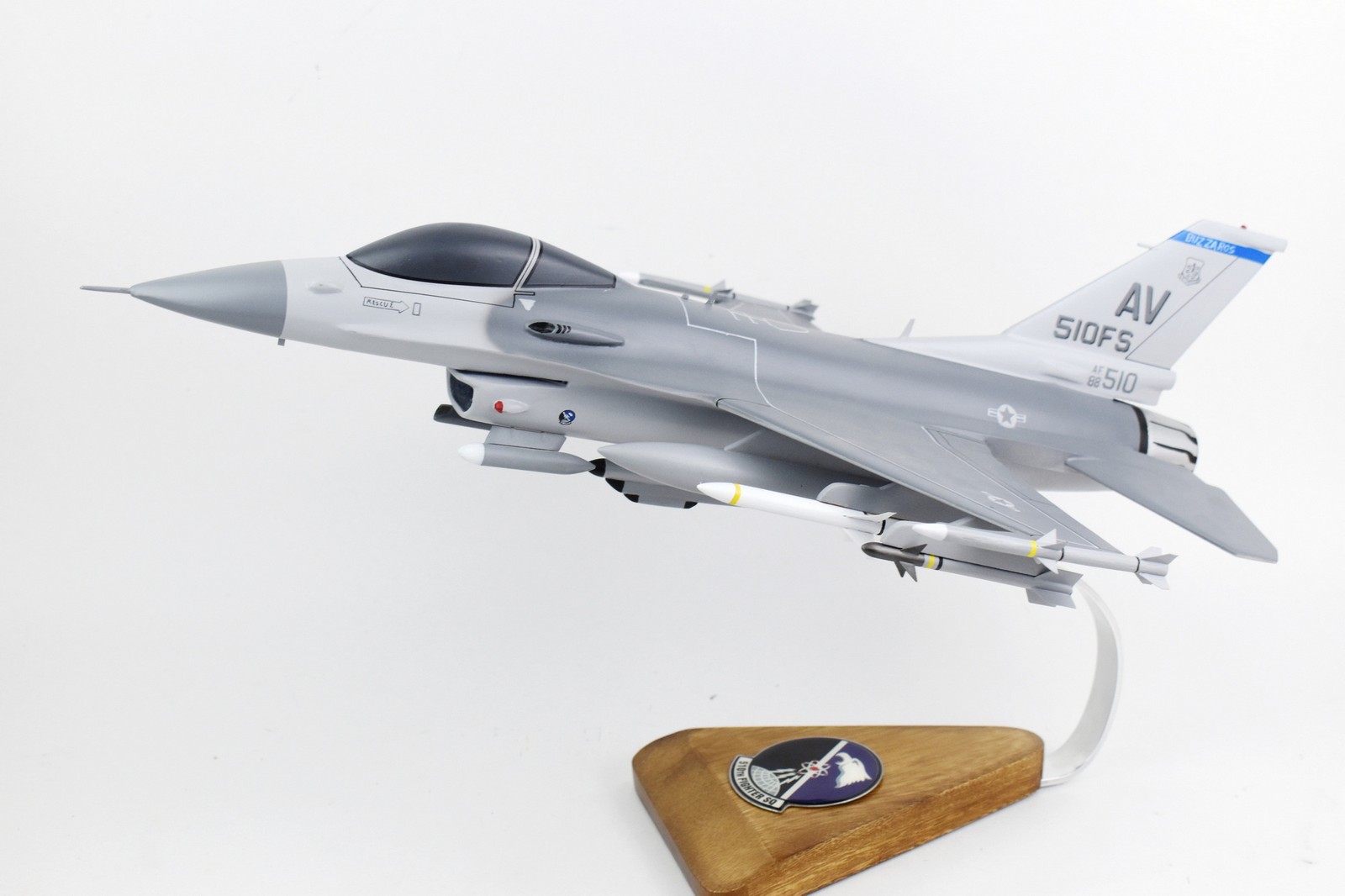
Lockheed Martin® F-16 Fighting Falcon®, 510th Fighter Squadron
Fly with the 510th Fighter Squadron in this handcrafted F-16 Fighting Falcon model. You'll proudly be able to display this carefully crafted wooden model.
- Length - 18 inches
- Made from Mahogany
- US Veteran-Owned Business
- Officially Licensed by Lockheed Martin
- The manufacturer does not intend for children 12 years and younger to use the product
LOCKHEED MARTIN, F-16 Fighting Falcon, associated emblems and logos, and body designs of vehicles are either registered trademarks or trademarks of Lockheed Martin Corporation in the USA and/or other jurisdictions, used under license by Squadron Nostalgia LLC.
By U.S. Air Force photo by Tech. Sgt. Dave Ahlschwede, Public Domain
The F-16 Fighting Falcon appeared in the late 1970s. It was designed by General Dynamics to serve as a multirole fighter jet. The U.S. Air Force wanted a lightweight, agile aircraft to replace older models. Soon, the F-16 gained recognition for its exceptional maneuverability and ease of operation during various missions.
In 1980, the 510th Fighter Squadron stood up at MacDill Air Force Base. It became part of the U.S. Air Force after being established to operate F-16 jets. The squadron's primary mission included air superiority and ground attack. As a result, it contributed significantly to the military's operational readiness and effectiveness.
Throughout the 1980s, the 510th Fighter Squadron trained tirelessly. It participated in numerous exercises, improving pilot skills. Because of their rigorous training, pilots learned how to employ advanced tactics. This preparation ensured that they could engage in both air-to-air and air-to-ground missions effectively whenever called upon.
In the 1990s, the 510th Fighter Squadron deployed in support of Operation Desert Storm. The squadron flew numerous combat sorties, showcasing the F-16's capabilities. Pilots engaged enemy forces successfully, providing air support to allied ground troops. Their efforts played a crucial role in achieving military objectives during the conflict.
As military needs evolved, so did the 510th Fighter Squadron's mission. The squadron adapted to newer technologies and strategies. Thus, they integrated advanced avionics and weapons systems into their operations. This commitment to modernization ensured that the squadron remained relevant and effective in a changing combat environment.
In the 21st century, the 510th Fighter Squadron continued to excel. It participated in various international exercises and deployments. By fostering partnerships with allied nations, the squadron enhanced interoperability. Consequently, these collaborations improved operational capabilities and readiness among partner forces, bolstering collective security goals.
Today, the 510th Fighter Squadron remains a vital part of the Air Force. It continues to train exceptional pilots and support international missions. Its legacy reflects the enduring commitment to excellence and readiness. Undoubtedly, the squadron's rich history highlights the significant role of the F-16 Fighting Falcon in modern air power.