By William Ortis, Lionheart Creations
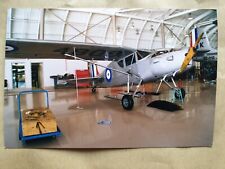
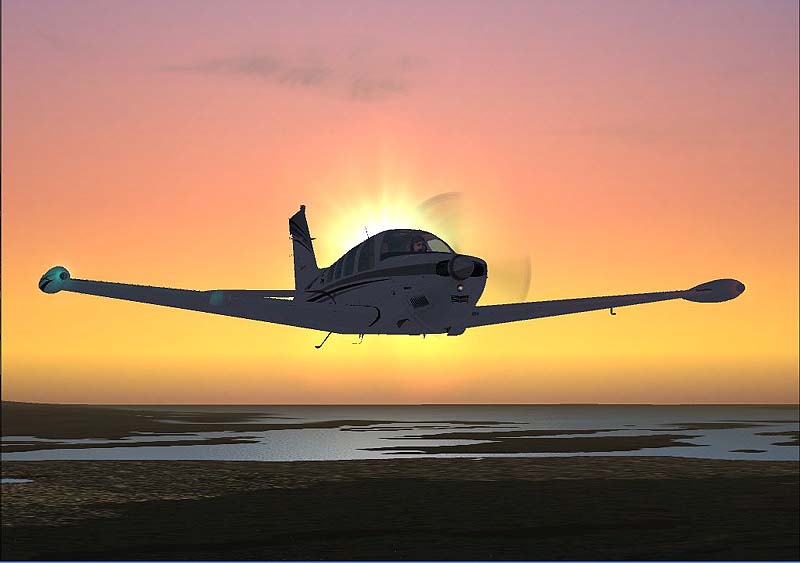
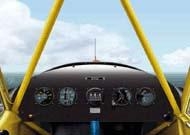
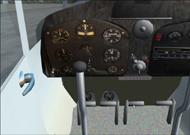
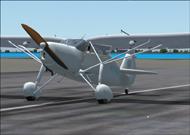
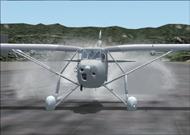
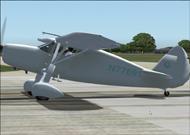
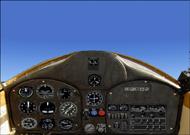
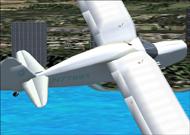
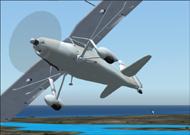
Model with panel and virtual interior, full moving parts, opening doors, opening cowling, detailed engine compartment, working suspension and steering tail wheel. Also sports pop-down landing lights which function. Includes an antique radio. This was my dad’s plane, Francis (June) Ortis, in which he had fully restored it and won a number of awards at various fly-ins. Registry: N77691. Includes non stock FS2002 instruments.



HISTORY
The Fairchild Model 24 was initially produced in 1932 as a braced high-wing monoplane with seating for two persons, side by side. It enjoyed a fairly successful sales career, being developed through a number of civilian and military models. Purchasers had a choice of a number of radial or in-line power plants, seating capacities and utility or de luxe models.
The USAAF operated variants designated C-61 and UC-61, usually known as the Forwarder. The US Navy employed the Fairchild in GK-1 and JK-1 designations. The US Coast Guard flew it as the J2K, and the RAF operated a number under Lend-Lease as the Argus. Four examples entered RAAF service for communications duties between September 1940 and March 1943. Three (serials A36-1, -2 and -4) were model 24Rs, with inline engines, and the fourth (A36-3) was a 24G, with a Warner Scarab radial engine. All survived the war and were sold in 1945-46.
A number of examples of this pre-war aircraft remain active throughout the world, and the 2000 Australian civil register showed one Model 24R and four Model 24Ws, the population rising in 2002 by one further 24R.
All good things come to an end, and the Fairchild Model 24 came to hers in 1946. She really can’t gripe though, because thirteen years is a long time for anything to be in production virtually unchanged. The original 1933 24C-8-C used a 145-hp Warner radial and carried three passengers. The next thirteen years saw another seat added in 1937, minor styling changes, and several new engines, but other than that, the 1946 Model 24 was the same as the 1933 model.
SPECIFICATIONS
TYPE: 3-4 seat light transport.
COUNTRY OF ORIGIN: United States
POWER PLANT: Warner Super Scarab 50 radial engine, 145 hp; ACE Cirrus Hi-Ace 4-cyl inverted inline engine; variety of Ranger 6-cyl. inline engines of 145-165 hp.
DIMENSIONS:
Wing span: 36 ft 4 in / 11.07 m.
Length: 23 ft 10 in / 7.26 m
Height: 7 ft 4 in / 2.24 m.
WEIGHTS:
Empty: 1,475 lb / 669 kg
Max. take off: 2,400 lb / 1089 kg
PERFORMANCE:
Max. speed: 130 mph / 209 kph a.s.l.
Cruising speed: 118 kt / 190 kph
Initial climb; 875 ft / 206 m. per min.
Service ceiling: 16,500 ft / 5030 m.
Range: 475 mls / 754 km
CAPACITY: Seats 3-4.
COMMENT
No lack of enthusiasm here! The author of this beautiful Fairchild 24-R did a supreme job modeling the aircraft. I spent about two hours combing over some three view drawings and pictures of the aircraft and I must say the model is right on. There is no lack of goodies either, plenty of moving parts, detail (including an opening cowl [Shift+T], VC, and an old fashioned instrument panel. This model is very authentic looking. The author stated that this is a work in progress so I wont be too hard on the textures, but with some wood texture on the prop, some chrome, and some color, she would be sweet looking plane! Be sure to read the ‘read-me’ file in the download. The gauges folder is located in the panel folder, and there are some things you may need to know to navigate the VC. My suggestion to the author would be to start the VC in the pilot seat on the next update. Flight characteristics are reminiscent of the period, slow and steady. Tight turns will cause you to lose significant altitude, and she loves to glide across the runway on touchdown similar to the Piper Cub. All told I had a lot of fun reviewing this model. Kudos to the author for all his hard work. I for one am looking forward to the update! Textures, and some interior details would top this plane off nicely.
My Rating 7/10 Needs Textures